friendsof.wiki: a quick changelog
I’ve updated friendsof.wiki. Quick changelog since my last blog post:
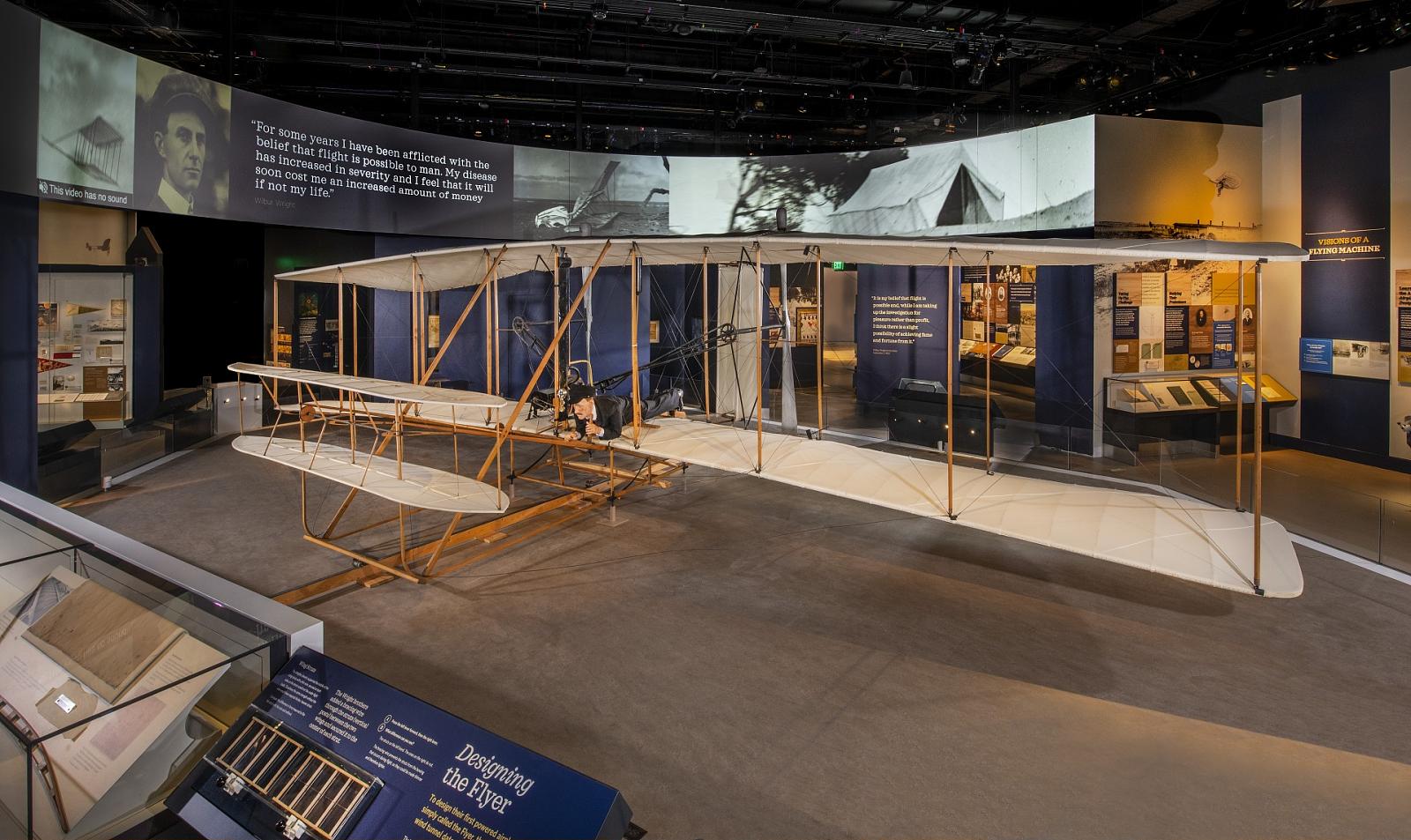
The 1903 Wright Flyer on display at the National Air and Space Museum, CC0. One of 19 openly licensed images on the museum’s own digital record of the aircraft.
-
Added an FAQ. Might (or might not!) be a little more clear what I’m trying to do here. TLDR: mostly experiment and learn about how open data works (and doesn’t) in the wild in 2026.
-
Single objects, held at a single museum, merge the museum data into infoboxes. As a different approach from the round of experiments, which hoovered up as much data from as many different places as possible, I wanted to see what it would look like if we trust and prioritize the institution that holds a specific object. For The Night Watch, the Spinola Hours, or the Hours of Jeanne d’Evreux, the page now leads with the museum’s own catalog record and every other partner sits the page out. I don’t think that is a good long-term position (many other partners have information about Rembrandt, for example!) but it’s been a good thought experiment for me, and I learned a lot about how infoboxes can/can’t interact with Wikidata that I hope to be able to put into practice soon.
-
Fixed how I show copyright information. Getting copyright correct is important to Wikipedians, for good reason; I tried to make it easier to see what we know from “pure” metadata, including where the upstream source and Wikidata conflict. I already knew this was going to be a point of conflict, so not necessarily much learning from this.
-
I added glTF support. Wikidata doesn’t have a ton of glTF data points, basically all from the Smithsonian. I added support for species articles, like the common seadragon. Learning: there is some nifty stuff out there! would be nice to get this onto the main Wikipedia.
-
I added DigitalNZ as a data source. Based on a discussion with Stuart Yeates, I added DigitalNZ as a source. It helps some New Zealand articles, but is high noise on others (like Apollo 11). Shows that if we want to go this route at scale, curation looks different — but is still very important.
-
I probed IIIF more. IIIF is still pretty limited, because many of the IIIF partner institutions have challenges—eg one had a broken SSL cert; another had broken licensing data (in an otherwise exemplary data set). But where it is present, it can be rich. This is a shame; it’d be great to support this better on-wiki, but it may be hard to justify.
-
Closed approximately 200 SonarSource issues, including 24 complexity issues. I genuinely enjoy using SonarSource (disclaimer: my employer) with LLM-generated code. It’s clear these tools can over”think” code. So when Sonar spots a complexity issue and the bot fixes it, I feel a lot better about the long-term maintainability of the codebase.
I’m probably going to let this sit for a bit; I think most of the next steps are to do with learnings of how to start bringing this back into Wikidata — and from there onto the real wiki — in an impactful way.